
Forecasting Australia’s disaster migration future
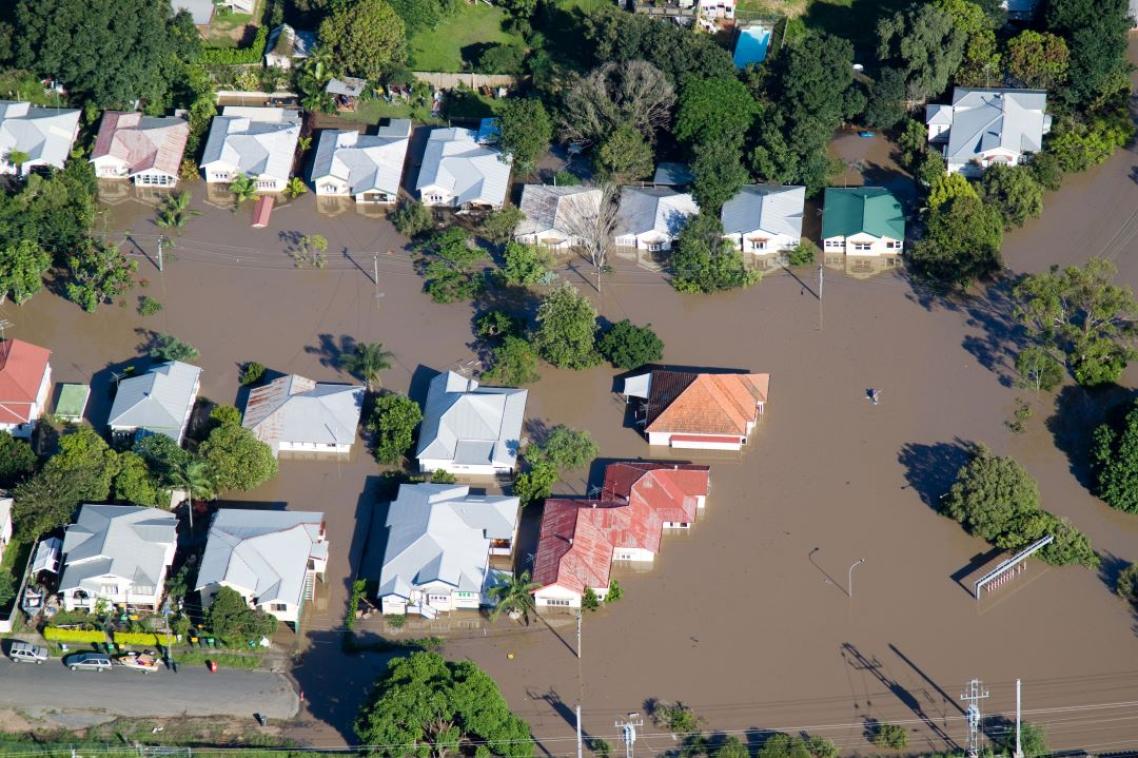
(Photo credit: Adobe. )
A multi-disciplinary University of Queensland project aims to quantify how many Australians will be forced to relocate because of climate change disaster scenarios in the next 25 years.
Dr Aude Bernard from UQ’s School of the Environment says current population projections based on fertility, mortality and migration don’t take into account how people will respond to more intense and frequent natural disasters.
“Every year since 2009, close to 23,000 Australians aged over 15 have been displaced because of housing damage caused by floods, bushfires and cyclones,” Dr Bernard said.
“We expect this number to increase because of climate change and because our population is growing.
“But these social consequences of a changing climate are missing from the way we currently model the future size, composition and distribution of Australia’s population.
“There is an urgent need for climate-migration forecasting anchored in data to help governments and communities assess and prepare.”
Dr Bernard is a recipient of a prestigious UQ Research and Innovation Week Foundation Research Excellence Award, designed to assist researchers to develop ideas, build on their past work and make a sustained impact on their field of study.
“Our first step will be to forecast how many people will be displaced by disasters between now and 2050,” Dr Bernard said.
“The disaster-induced migration project will combine datasets from more than 10 different sources.
“It will include work done at UQ on how Australians have historically responded to disasters along with forecasts of climate change scenarios and existing knowledge of population dynamics.
“There is a lot of uncertainty in all three of those areas, so the new model will be dynamic and able to respond to changing inputs as circumstances and events unfold.
“Because of the complexity, the work will involve people in demography, economics and data science working with climate scientists.
“We want to provide valuable guidance to federal, state and local governments who need to plan disaster responses, services and infrastructure as well as companies in the insurance and real-estate sectors.”
The new migration forecasting framework incorporating population-climate interactions will be completed by mid-2025 when Brisbane hosts the International Population Conference.
Related articles

A new way to navigate tough land and water use decisions
